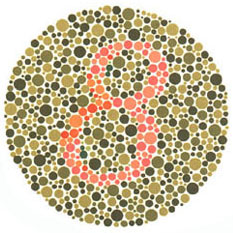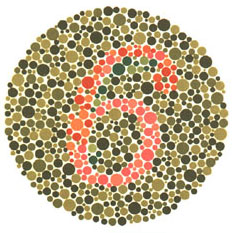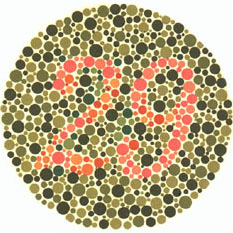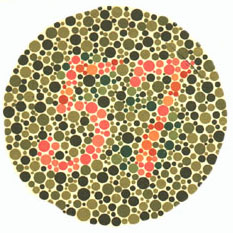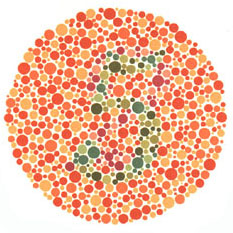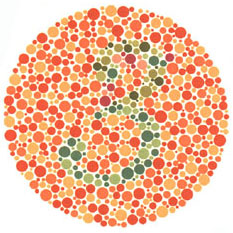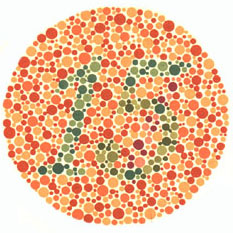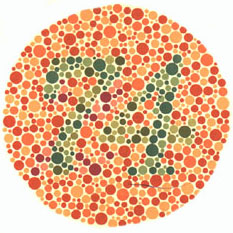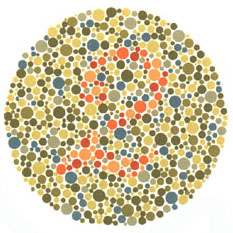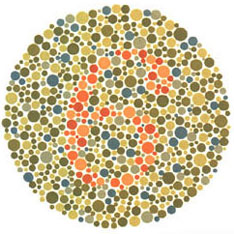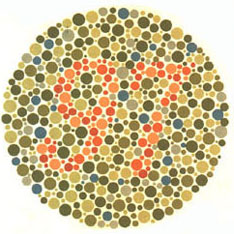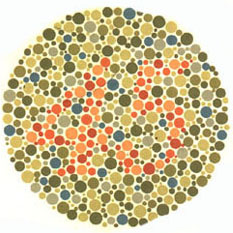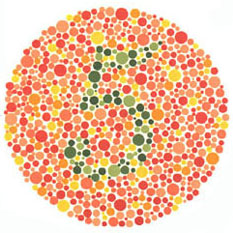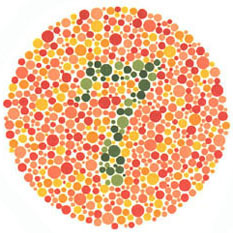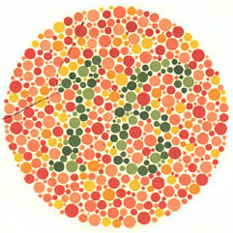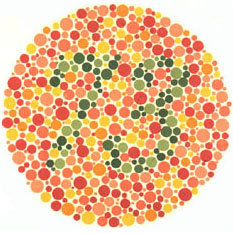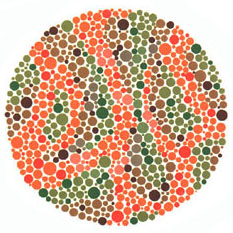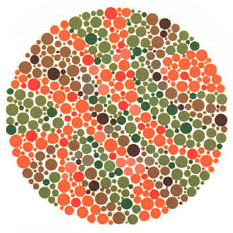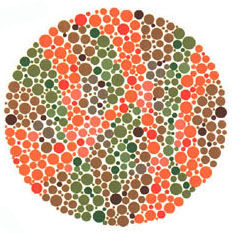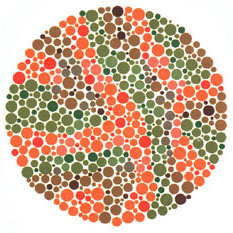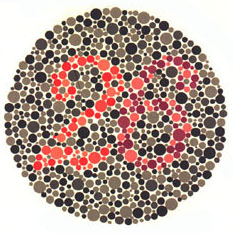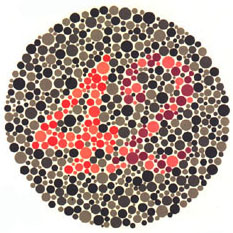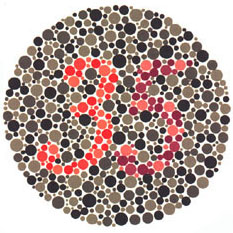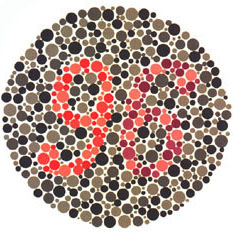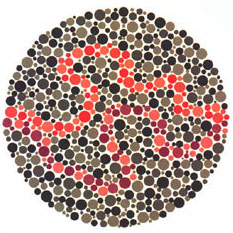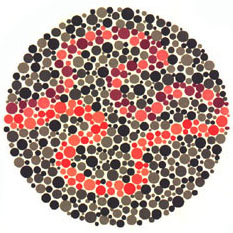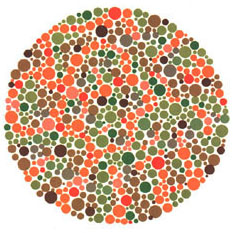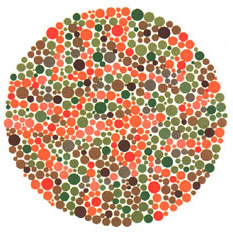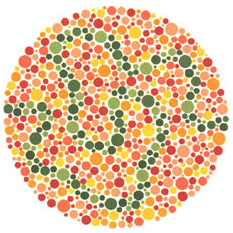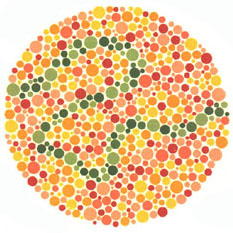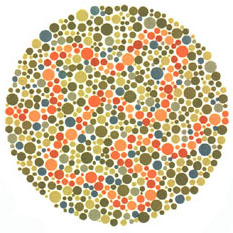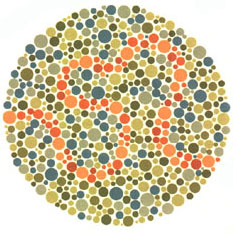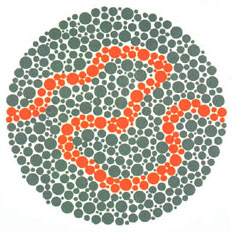
Ishihara’s Test for Colour Deficiency:
38 Plates Edition

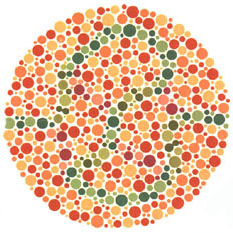
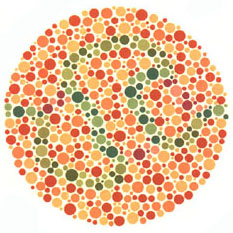
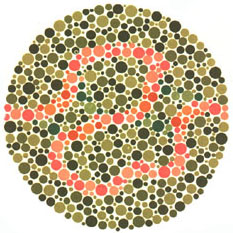
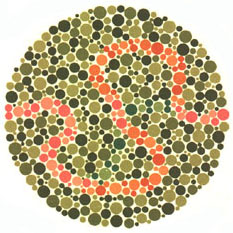
Dr Shinobu Ishihara introduced in 1917—almost 100 years ago—the most well known color blindness test. Each of his tests consists of a set of colored dotted plates, each of them showing either a number or a path. Since then this is the most widely used color vision deficiency test and still used by most optometrists and ophthalmologists all around the world.

There are other color blindness tests available, but none of them is as famous as the Ishihara plates. It is also well known, that even people with normal color vision sometimes struggle with this test. But nevertheless this plates are still in use in the absence of any better and still affordable color vision test.

Hereafter the 38 Ishihara Plates will be shown. If you would like to take an online test, please visit my collection of Online Color Blindness Tests.
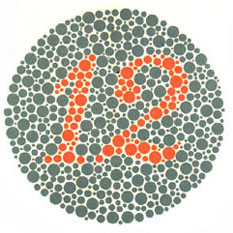
Ishihara Plate 1 of 38 Ishihara Plate 2 of 38 Ishihara Plate 3 of 38 Ishihara Plate 4 of 38 Ishihara Plate 5 of 38
Ishihara Plate 6 of 38 Ishihara Plate 7 of 38 Ishihara Plate 8 of 38 Ishihara Plate 9 of 38 Ishihara Plate 10 of 38
Ishihara Plate 11 of 38 Ishihara Plate 12 of 38 Ishihara Plate 13 of 38 Ishihara Plate 14 of 38 Ishihara Plate 15 of 38
Ishihara Plate 16 of 38 Ishihara Plate 17 of 38 Ishihara Plate 18 of 38 Ishihara Plate 19 of 38 Ishihara Plate 20 of 38
Ishihara Plate 21 of 38 Ishihara Plate 22 of 38 Ishihara Plate 23 of 38 Ishihara Plate 24 of 38 Ishihara Plate 25 of 38
Ishihara Plate 26 of 38 Ishihara Plate 27 of 38 Ishihara Plate 28 of 38 Ishihara Plate 29 of 38 Ishihara Plate 30 of 38
Ishihara Plate 31 of 38 Ishihara Plate 32 of 38 Ishihara Plate 33 of 38 Ishihara Plate 34 of 38 Ishihara Plate 35 of 38
Ishihara Plate 36 of 38 Ishihara Plate 37 of 38 Ishihara Plate 38 of 38


Personal comment: I believe that this scanned plates have some shifts in color. They don’t really consist of the same colors as the original versions. With these plates I would suffer from deuteranomly as any other test shows that I’m suffering from protanomaly.

There exist four different types of plates:

  • Vanishing design: Only people with good color vision can see the sign. If you are colorblind you won’t see anything.
  • Transformation design: Color blind people will see a different sign than people with no color vision handicap.
  • Hidden digit design: Only colorblind people are able to spot the sign. If you have perfect color vision, you won’t be able to see it.
  • Classification design: This is used to differentiate between red- and green-blind persons. The vanishing design is used on either side of the plate, one side for deutan defects an the other for protans.

Try your best! If you can see all of them you are definitely color abnormal, as some of them should only be seen by colorblind people and others only by non-colorblind ones :-)


7 Responses to “Ishihara’s Test for Colour Deficiency:
38 Plates Edition”

  1. Appayipyip Says:

    I can read the plates just fine, but some interesting things appear:
    For the ones only colorblind people can see, I would describe it as a broken number “on fire.” Not a whole, clear number, but a broken one. For example, there used to be a 45 there, but someone lit it on fire. Now it’s gray and ashy, broken and flames envelop it.

    Also in one I see two numbers overlaying each other. So in one of them, I see a 2 and a 5. Because I can see them both at once, it looks like an 8. The 2 stands out more, though, if I had to pick.

  2. Gerunds Says:

    There is a set of 4 discs between the first and second set of numbers – I can see a reddish-orange on blueish-green design there, but nothing else, no real number or symbols, just fragments (4, 3, and 8 vaguely). Are these a contro of some sort?

  3. Appayipyip Says:

    I believe those are the ones only the red-green deficient are supposed to be able to see. I refer to them as “numbers on fire” in my previous post, and I also see fragments, but not full numbers.

  4. Valerie Says:

    I see something on all discs. Numbers on some, “snake-like” or “worm-like” on others (ie, on the very last disc, I see blue background with an orange “snake” running from one side to the other.) Interesting!

  5. Ying Says:

    I think you’re right about these colors being shifted. I just tested my little boy and he turned deuteran as well. We’re pretty sure he had protanopia before. These things can’t change, right?

  6. sumit kumar Says:

    good…. so there colour blind people just see differently…they are not blind to colours….there are colours that normal ppl cant see but colour blind can,,,then it’s not a deficiency…

  7. Terry Cunningham Says:

    I’ve done this test and had the original doctor book ISHIHARA’S TESTS FOR COLOUR DEFICIENCY in my hand at the same time and I can tell you the book test is harder, though the same numbers and lines it’s a lot harder to pick the numbers, I’m partly colourblind and I can tell some of these numbers in this test but just one in the real book the first one 12.. the colours are a bit off in this online version, so you can’t go from this test, only the book.. Its a $400 book new but I got mine on ebay for $75 second hand, just letting you know :-)

Please also consider to share your information or ask your question at the Color Blindness Forum, a place where people can find inputs, share stories, ask questions and more—all about color blindness. Join the colorblind community!